
Our Blog
Turning Waste Into Sustainable Energy & Value
How to Switch Your Brick Kiln to Alternative Fuel: A Practical Guide for Bangladesh
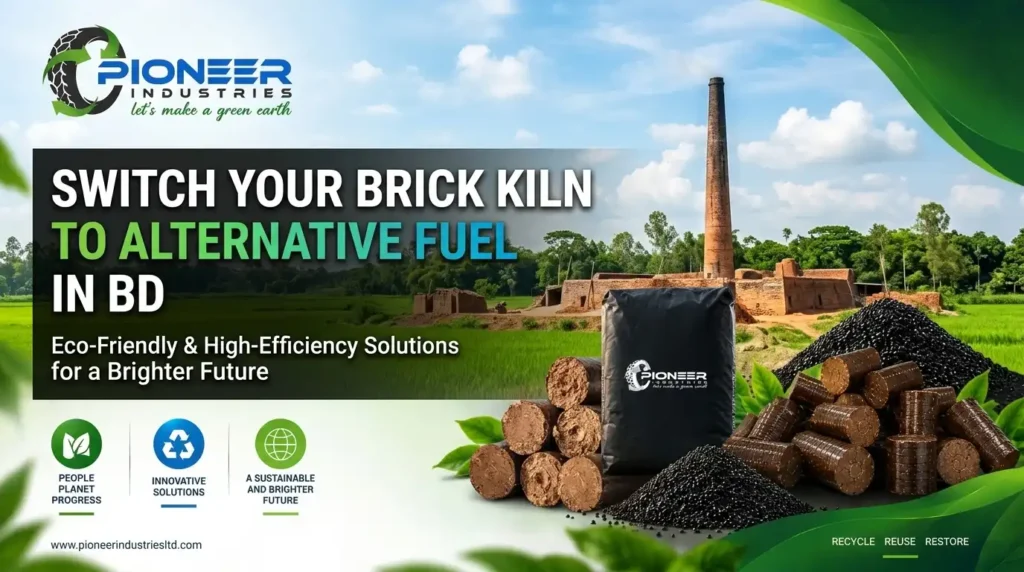
To switch your Alternative Fuel For Brick Kiln in Bangladesh, transition from dirty coal and firewood to high-density biomass briquettes or liquid pyrolysis green oil. Pioneer Industries Ltd supplies verified alternative fuels that help brick kiln operators lower air pollution, cut fuel expenses, and comply with Department of Environment regulations without compromising heat output.
Brick manufacturing plays a vital role in Bangladesh’s expanding construction and infrastructure sectors. However, traditional brick kilns rely heavily on imported sub-bituminous coal and raw timber, contributing significantly to seasonal air pollution and rising operational expenses. Tightening local environmental regulations, combined with volatile global coal prices, are forcing kiln owners to adopt cleaner, more economical fuel solutions. Adopting a reliable alternative fuel for brick kiln firing allows plant operators to protect profit margins while satisfying environmental mandates. Pioneer Industries Ltd is a Dhaka-based eco-manufacturer of pyrolysis green oil, recovered carbon black, and biomass briquettes. In this practical guide, you will learn how to evaluate, prepare, and convert your brick kiln facility to high-efficiency alternative fuels.
The Regulatory and Financial Pressure on Bangladesh Brick Kilns
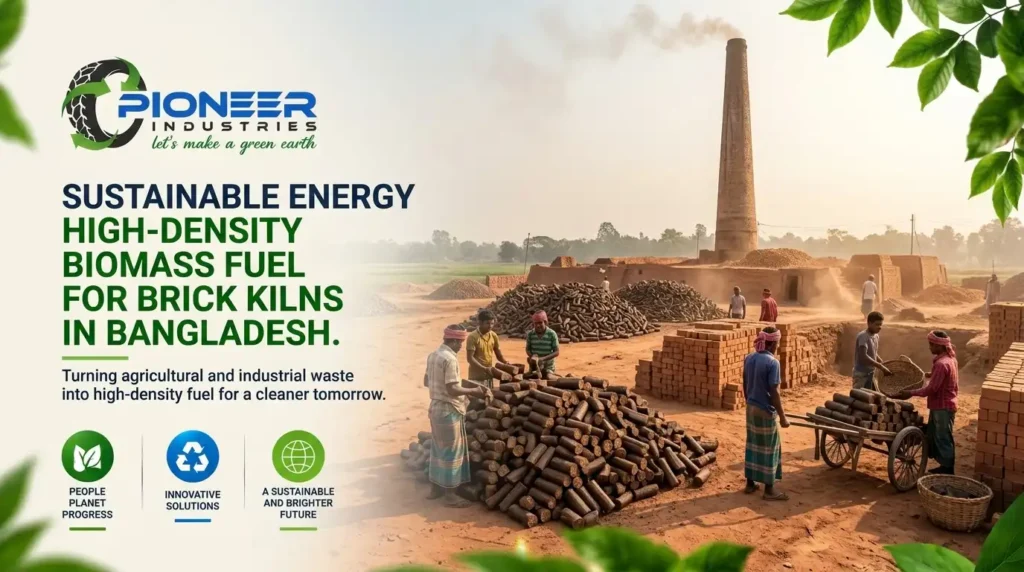
Brick kiln operators across Bangladesh face continuous scrutiny from national environmental authorities over stack emissions and deforestation. Traditional coal combustion releases massive volumes of sulphur dioxide, soot, and carbon fly ash into surrounding agricultural areas.
In addition to environmental penalties, reliance on imported coal exposes kiln owners to severe currency fluctuations and supply bottlenecks during peak production seasons. Transitioning to alternative fuels manufactured within Bangladesh secures a domestic energy line, lowers stack smoke density, and helps kilns maintain continuous seasonal operation without regulatory shutdowns.
Choosing the Right Alternative Fuel for Your Kiln Design
Selecting the correct fuel type depends on your specific kiln architecture, firing method, and thermal control requirements. Different kiln technologies—such as Zig-Zag kilns, Tunnel kilns, and Hybrid Hoffman Kilns (HHK)—can accommodate solid or liquid eco-fuels:
Option 1: High-Density Biomass Briquettes (Solid Fuel)
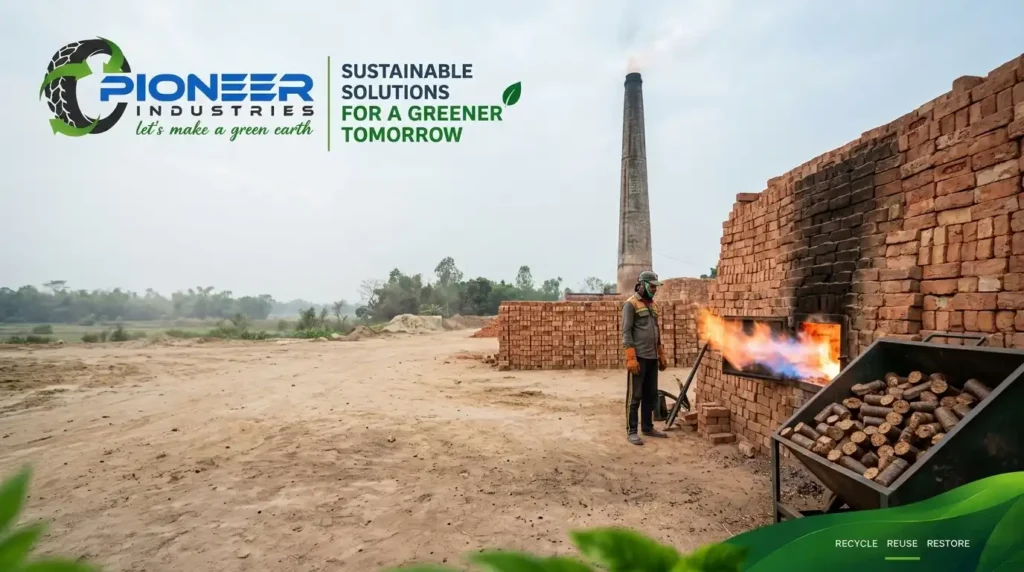
Biomass briquettes are made from compressed agricultural residue and wood waste, offering high density and low smoke combustion. They act as a direct alternative to coal and firewood in Zig-Zag and traditional combustion chambers, burning evenly with minimal ash.
Option 2: Pyrolysis Green Oil (Liquid Fuel)
Pyrolysis oil is a high-calorific liquid fuel recovered from recycled rubber tires. Pioneer Industries Ltd produces Pioneer Green Oil featuring a high calorific value of 10,400 ± 3% cal/g, sulphur content up to 1%, ash up to 0.05%, water content up to 0.25%, and a density of 0.87–0.93 g/cc at 15°C. It serves as an exceptional burner fuel for automated liquid-fired brick kilns and pre-heating units.
Comparing Alternative Fuels with Traditional Brick Kiln Coal
Understanding the operational differences between traditional coal and modern eco-fuels ensures a seamless transition for your firing crew:
Fuel Characteristics | Imported Sub-Bituminous Coal | Pioneer Green Oil | Biomass Briquettes |
Fuel Physical State | Solid Lumps | Refined Liquid | Solid Cylinders |
Combustion Smoke Level | Heavy Black Smoke | Very Low Smoke | Low White Smoke |
Sulphur Impact | High Sulphur Build-up | Sulphur up to 1% | Negligible Sulphur |
Ash & Slag Formation | High Furnace Slagging | Extremely Low (Ash 0.05%) | Low Ash Output |
Supply Origin | Foreign Import Market | Local Bangladesh Producer | Local Bangladesh Producer |
Step-by-Step Practical Guide to Retrofitting Your Brick Kiln
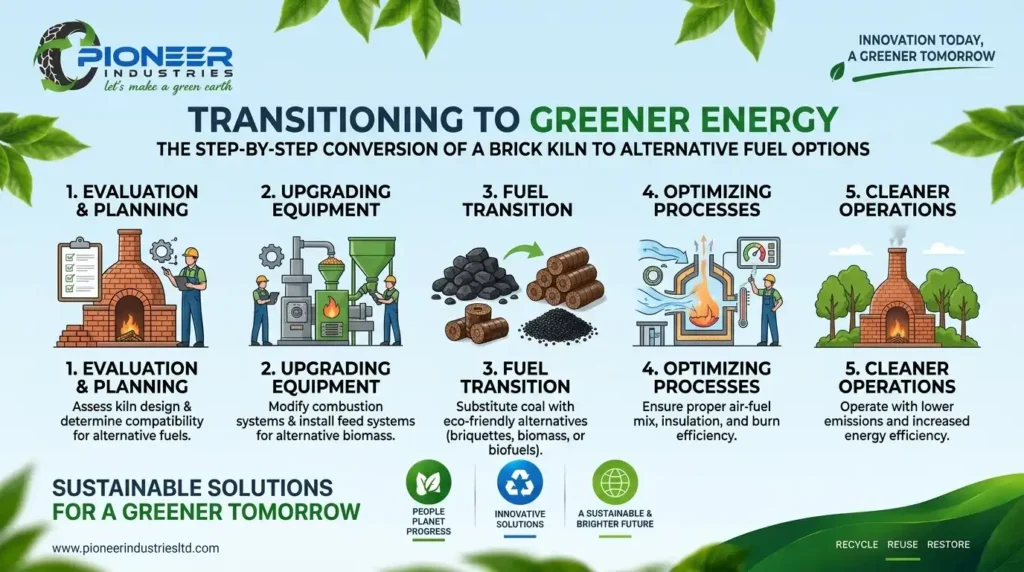
Transitioning your facility to alternative fuel for brick kiln firing requires a structured, multi-phase technical approach to safeguard brick strength and firing times.
Step 1: Storage and Handling Preparation
Prepare clean, covered storage areas for solid Biomass Briquettes to protect them from ambient moisture. For liquid green oil, install standard mild steel storage tanks equipped with primary mesh filtration.
Step 2: Burner and Grate Calibration
If converting to liquid green oil, fit standard heavy-oil mechanical atomizing burners to your kiln’s firing ports. For solid briquettes, adjust firing grate spacing and draft fan speeds to accommodate uniform combustion rates.
Step 3: Trial Blending and Temperature Monitoring
Begin by co-firing alternative fuels with your existing stock at a 30/70 ratio, gradually increasing the alternative fuel proportion. Monitor fire zone temperatures using optical pyrometers to ensure steady heat distribution across all brick setting lines.
Cost-Benefit Analysis and Potential Operational Savings
Switching from expensive petroleum fuels or imported coal to locally manufactured alternative fuels directly improves a brick plant’s bottom line. Because eco-fuels are produced domestically by Pioneer Industries Ltd, transport overhead is greatly minimized.
Based on reference comparisons, switching to pyrolysis green oil delivers potential savings of 5–10% compared to heavy furnace oil, and potential savings of 25–30% compared to industrial diesel fuel. Furthermore, the low ash content of biomass briquettes and green oil reduces manual grate cleaning labor and extends refractory lining life. Kiln owners involved in broader industrial manufacturing can also explore our Recovered Carbon Black for rubber compounding needs.
Conclusion
Upgrading your brick manufacturing facility with a reliable alternative fuel for brick kiln firing is an effective way to lower energy costs, maintain steady combustion temperatures, and meet Bangladesh environmental standards. Whether your plant requires high-calorific green oil or dense biomass briquettes, transitioning to eco-manufactured fuel protects your operations against global energy market shocks. Pioneer Industries Ltd is a Dhaka-based eco-manufacturer of pyrolysis green oil, recovered carbon black, and biomass briquettes dedicated to supporting sustainable industrial growth. Ready to upgrade your kiln’s fuel efficiency? Get a custom quote today by calling +880 1337 445522, emailing pioneer.greenoil@gmail.com, or submitting your inquiry through our contact page.
Frequently Asked Questions
What is the best alternative fuel for brick kiln firing in Bangladesh?
The best alternative fuel depends on your kiln design. For automated liquid burner systems, pyrolysis green oil is ideal due to its high heat value (10,400 ± 3% cal/g). For solid-grate Zig-Zag kilns, high-density biomass briquettes serve as an excellent low-smoke coal replacement.
Can I mix biomass briquettes with traditional coal in my brick kiln?
Yes, brick kiln operators frequently co-fire biomass briquettes with coal during the transition phase. Gradually increasing the briquette ratio helps firemen adjust draft settings while immediately lowering fuel costs and stack smoke density.
How does using green oil benefit brick kiln heat control?
Pyrolysis green oil flows consistently through automated burners, allowing precise temperature regulation inside the firing zone. This uniform heat distribution reduces brick cracking, minimizes under-burnt bricks, and accelerates firing cycles compared to irregular coal feeding.
How much can a brick kiln save by switching to alternative liquid fuel?
Based on reference comparisons, brick plants utilizing pyrolysis green oil achieve potential savings of 5–10% compared to standard furnace oil, and potential savings of 25–30% compared to industrial diesel fuel.
Where can brick kiln owners buy alternative fuel in Bangladesh?
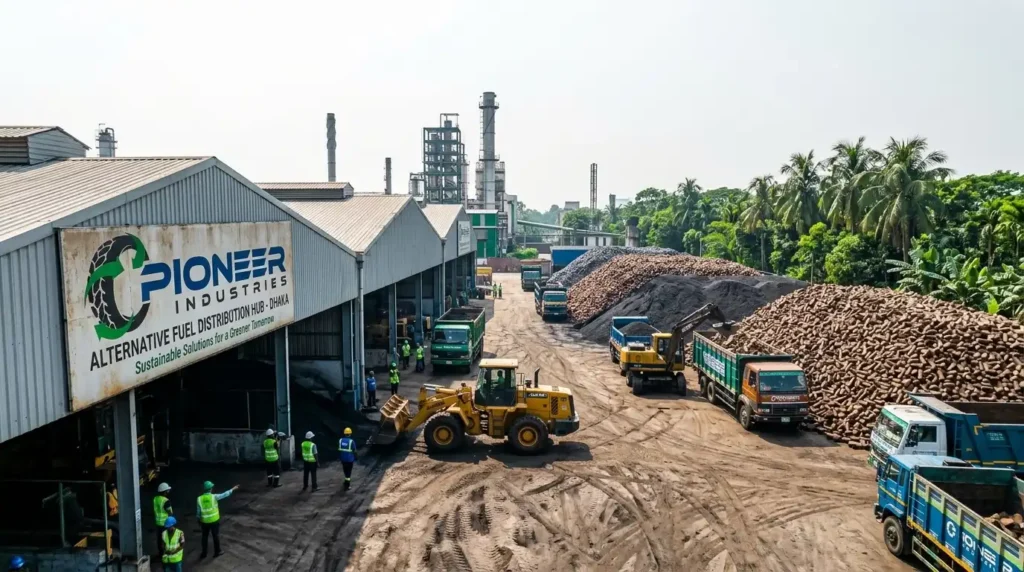
Brick kiln owners can purchase certified alternative fuels directly from Pioneer Industries Ltd. Located in Kawran Bazar, Dhaka, Pioneer Industries Ltd provides bulk delivery of green oil and biomass briquettes to brick plants across Bangladesh.
