
Our Blog
Turning Waste Into Sustainable Energy & Value
Is Tire Pyrolysis Safe and Eco-Friendly? Facts, Emissions and Regulations Explained

Modern tire pyrolysis is safe and environmentally sound when conducted inside sealed, oxygen-free reactors with advanced gas scrubbing systems. Pioneer Industries Ltd utilizes controlled thermo-chemical technology in Bangladesh to convert scrap tires into valuable fuels and materials while adhering strictly to local industrial emissions guidelines and environmental safety standards.
As rapid urbanization increases automobile usage across Bangladesh, managing millions of discarded end-of-life tires has become a critical waste challenge. Open burning or illegal dumping of scrap rubber pollutes air basins, clogs waterways, and creates hazardous pest breeding grounds. Many industrial decision-makers and plant managers ask: is tire pyrolysis safe as a long-term resource recovery solution? When evaluated against uncontrolled dumping or crude burning, modern thermal conversion offers a highly regulated, closed-loop processing pathway. Pioneer Industries Ltd is a Dhaka-based eco-manufacturer of pyrolysis green oil, recovered carbon black, and biomass briquettes. In this article, you will examine the core safety mechanisms of tire pyrolysis, analyze atmospheric emissions control, explore regulatory compliance frameworks in Bangladesh, and learn how recovered materials support industrial decarbonization.

What Is Tire Pyrolysis and How Does Safety Technology Work?
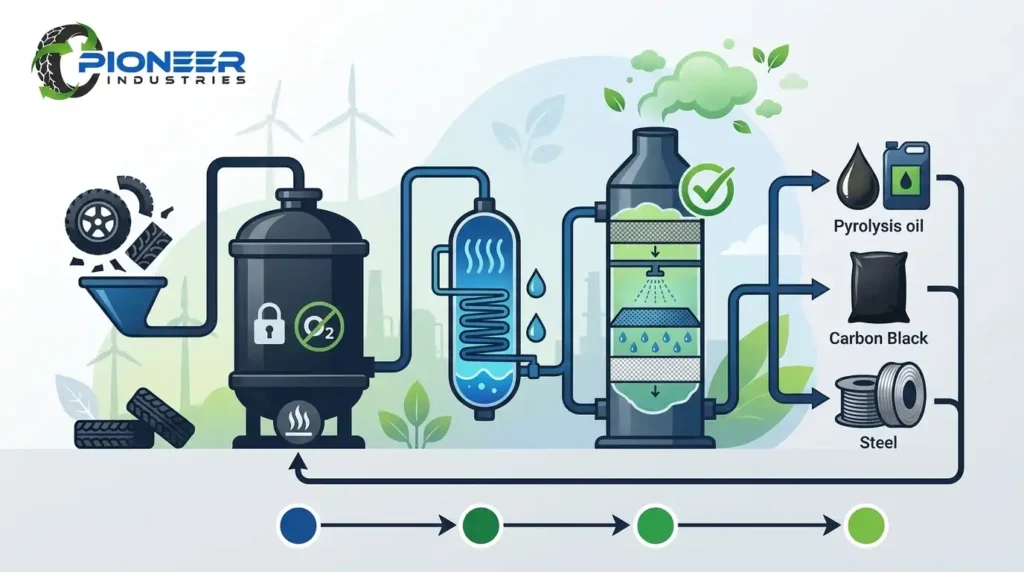
Tire pyrolysis is the thermo-chemical breakdown of rubber polymers at elevated temperatures inside an oxygen-free, hermetically sealed reactor vessel. Because the reactor operates without oxygen, combustion cannot occur, preventing fires or explosive burning during operation.
Asking whether is tire pyrolysis safe requires distinguishing between rudimentary open-fire operations and modern sealed continuous processing systems. Industrial plants utilize negative-pressure vacuum seals, automated gas leak detection, double-walled thermal insulation, and multi-stage pressure safety valves. These engineering controls prevent volatile hydrocarbons from leaking into the workplace atmosphere, ensuring a safe operational environment for technicians and neighboring communities.
Analyzing Environmental Emissions and Air Scrubbing Systems
Controlling atmospheric emissions is a fundamental requirement for modern eco-manufacturing plants. During thermal processing, volatile tire rubber breaks down into synthetic gas, liquid oil vapors, and carbon residues.
To ensure off-gas emissions remain well within environmental limits, processing facilities deploy multi-stage emission control technologies. Non-condensable synthetic gases pass through water-scrubbing towers, venturi scrubbers, and active carbon filters to neutralize sulphur compounds and remove fine particulates before clean exhaust exits through tall stacks.
Key Emission Control Standards in Modern Facilities
- Desulphurization Scrubbers: Neutralize acidic gases using lime water or alkaline scrubbing mediums.
- Baghouse Dust Collectors: Capture ultra-fine carbon black dust particles during solid handling and bagging.
- Closed-Loop Syn-Gas Recycling: Channels non-condensable synthetic gas directly back into the furnace burners to provide process heat, preventing volatile organic compound (VOC) venting.
Regulatory Framework and Compliance in Bangladesh
The Department of Environment (DoE) in Bangladesh enforces air quality regulations, environmental impact assessments, and waste disposal guidelines for industrial facilities operating nationwide. Modern eco-manufacturers must secure Environmental Clearance Certificates (ECC) by demonstrating compliance with ambient air standards and wastewater management rules.
Pioneer Industries Ltd operates in accordance with national safety and environmental mandates from our headquarters in Kawran Bazar, Dhaka. By processing municipal waste tires within sealed industrial systems, our operations turn a major solid waste burden into verified alternative fuels that help local factories reduce their reliance on higher-polluting imported coal or raw timber.

Evaluating Output Safety: Green Oil and Recovered Carbon
Safety evaluations extend to the secondary products generated during the recycling process. When processed under controlled industrial conditions, the resulting alternative fuels and recovered materials serve as high-performing inputs for heavy industry:
Recovered Product | Safety & Quality Characteristics | Primary Industrial Applications |
Pioneer Green Oil | Verified calorific value 10,400 ± 3% cal/g; sulphur 1%; ash 0.05%; water 0.25%; density 0.87–0.93 g/cc at 15°C | Boilers, brick plants, steel workshops, glass units, power plants, hot mix plants |
Recovered Carbon Black | Milled, demagnetized solid carbon powder; replaces virgin petroleum carbon | Rubber compounding, industrial masterbatches, plastic manufacturing |
Recycled Steel Wire | High-tensile steel wire cleaned of rubber residue; safe for remelting | Steel re-rolling mills and local foundries |
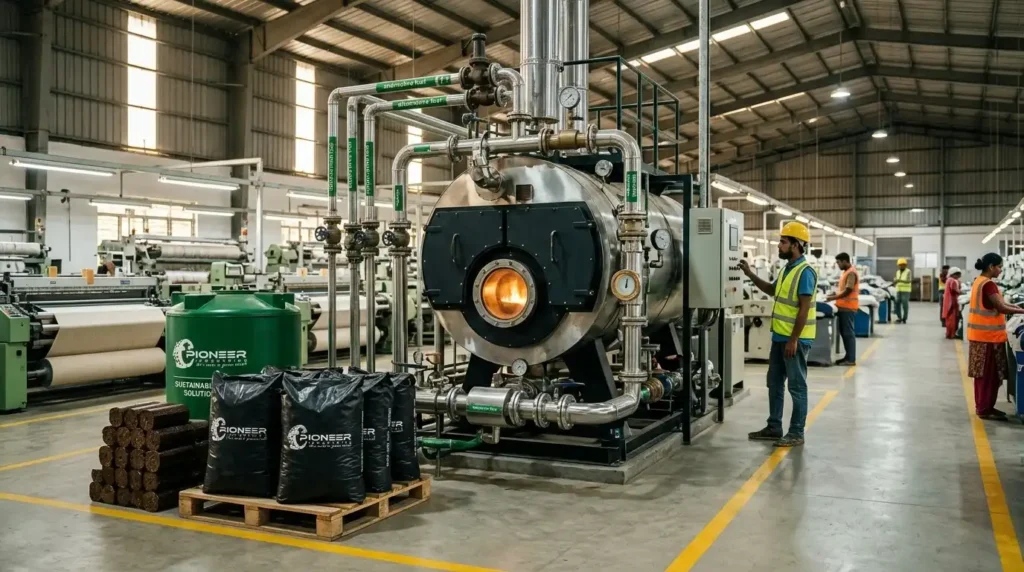
Using Pioneer Green Oil provides consistent, high-heat combustion for industrial burners. Based on reference comparisons, switching to green oil yields potential savings of 5–10% compared to heavy furnace oil, and potential savings of 25–30% compared to industrial diesel fuel.
Additionally, rubber manufacturers can integrate our Recovered Carbon Black to reduce reliance on virgin fossil inputs, while boiler operators seeking solid biofuel options can adopt high-density Biomass Briquettes.
Addressing Common Myths About Tire Recycling Safety
Misconceptions regarding thermal tire recycling often stem from confusing modern engineered facilities with informal open-air tire burning. Here are the core technical facts that clarify why is tire pyrolysis safe when conducted professionally:
- Myth 1: Pyrolysis causes uncontrolled black smoke. In reality, open burning produces smoke due to incomplete combustion in air, whereas pyrolysis occurs without oxygen inside sealed reactors with scrubbed exhausts.
- Myth 2: Process water pollutes local groundwater. Modern facilities utilize closed-loop cooling water circuits that recycle process water continuously without discharging untreated industrial effluent.
- Myth 3: Solid carbon residue is hazardous toxic waste. Recovered carbon black is refined, demagnetized, and processed into consistent technical grades for safe industrial manufacturing.
Conclusion
Understanding the engineering facts confirms that modern tire pyrolysis is safe, efficient, and environmentally responsible when supported by closed-loop processing technology and strict emissions scrubbing. By turning end-of-life tires into high-heat green oil and recovered carbon black, eco-manufacturers provide local industry with sustainable alternatives to dirty imported fuels. Pioneer Industries Ltd is a Dhaka-based eco-manufacturer of pyrolysis green oil, recovered carbon black, and biomass briquettes committed to advancing industrial safety and energy independence in Bangladesh. Ready to lower your plant’s fuel overhead with verified eco-fuels? Contact our technical team for a custom quote by calling +880 1337 445522, emailing pioneer.greenoil@gmail.com, or visiting our contact page.
Frequently Asked Questions
Is tire pyrolysis safe for nearby communities?
Yes, tire pyrolysis is safe for nearby communities when facilities operate sealed, oxygen-free reactors equipped with multi-stage gas scrubbers and baghouse filters. These systems capture volatile organic compounds and neutralize acid gases before exhaust air is safely released.
What is the difference between open tire burning and tire pyrolysis?
Open tire burning occurs in open air with uncontrolled oxygen, creating dense toxic black smoke and soil contamination. Tire pyrolysis is an oxygen-free thermo-chemical process inside an airtight vessel that converts rubber into refined fuel oil, carbon black, and steel without open flames.
How does Bangladesh regulate tire pyrolysis operations?
The Department of Environment (DoE) regulates tire pyrolysis facilities through Environmental Clearance Certificates (ECC), stack emission monitoring, ambient air quality checks, and strict industrial site location guidelines to ensure public and environmental safety.
What are the main products recovered from safe tire pyrolysis?
The primary products recovered are liquid pyrolysis green oil (for industrial boilers and furnaces), recovered carbon black (for rubber and plastic manufacturing), high-tensile recycled steel wire (for foundries), and combustible synthetic gas (recycled for process heating).
Where can factories buy safe alternative fuel in Bangladesh?
Factories can purchase tested, high-grade alternative fuels directly from Pioneer Industries Ltd. Located in Kawran Bazar, Dhaka, Pioneer Industries Ltd supplies pyrolysis green oil and biomass briquettes to industrial facilities across Bangladesh.
