
Our Blog
Turning Waste Into Sustainable Energy & Value
Waste Tire Recycling in Bangladesh: Why Circular Economy Matters for Industry

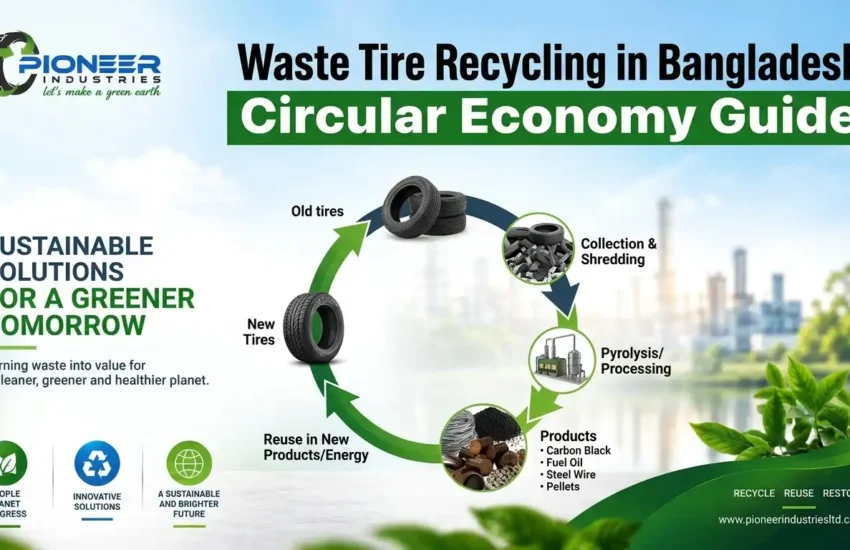
Waste tire recycling in Bangladesh transforms environmental pollution into industrial energy by converting scrap rubber into pyrolysis green oil, recovered carbon black, and steel. Embracing a circular economy model allows local manufacturers to reduce reliance on costly imported fossil fuels, cut waste disposal hazards, and secure sustainable domestic raw materials.
Rapid industrialization and expanding automotive transportation across Bangladesh generate millions of discarded tires every year. Dumping or open-burning these end-of-life tires creates severe municipal environmental hazards, traps non-biodegradable waste in landfills, and wastes valuable energy resources. Transitioning toward a closed-loop framework through advanced waste tire recycling in Bangladesh is crucial for long-term industrial sustainability. Pioneer Industries Ltd is a Dhaka-based eco-manufacturer of pyrolysis green oil, recovered carbon black, and biomass briquettes. In this article, you will learn how circular economy principles convert discarded rubber tires into high-value industrial fuels and recovered industrial materials for local factories and export buyers.
The Waste Tire Challenge in Bangladesh's Industrial Landscape
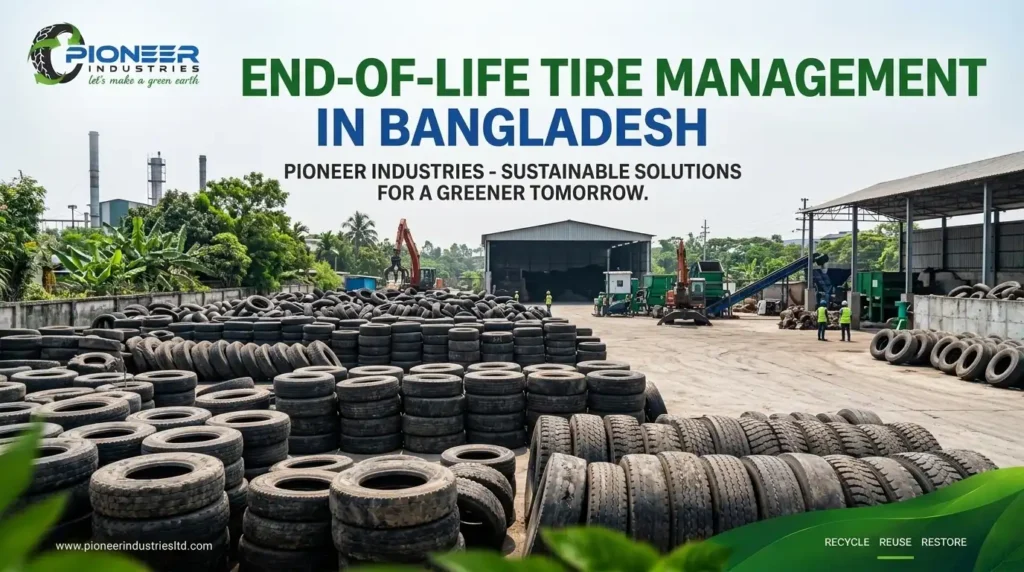
Discarded tires represent one of the most persistent solid waste challenges facing urban centers and industrial zones in Bangladesh. Standard rubber tires contain synthetic compounds, natural rubber, carbon black, and high-tensile steel wire, making them resistant to natural biological decomposition.
When abandoned in landfills or roadside dumps, waste tires collect rainwater, forming breeding grounds for disease-carrying mosquitoes. Furthermore, uncontrolled burning in informal sectors releases dense toxic smoke and sulphur compounds into the atmosphere. Establishing formal, industrial-scale recycling pathways is essential for protecting air and water quality while meeting Department of Environment standards.
How the Circular Economy Framework Redefines Industrial Waste
A circular economy is an economic model aimed at eliminating waste and the continual use of resources by turning end-of-life products into secondary raw materials. Unlike the traditional linear economy—which follows a “take, make, dispose” pattern—a circular framework closes resource loops.
Pioneer Industries Ltd implements circular economy practices by collecting end-of-life rubber tires and processing them through high-temperature, oxygen-free thermal conversion. Instead of treating scrap rubber as a liability, our operations recover its inherent energy and chemical compounds. This process generates high-heat liquid energy, solid carbon materials, and clean steel wire, keeping valuable resources active within Bangladesh’s industrial supply chain.

Key Industrial Outputs from Thermo-Chemical Tire Processing
Processing scrap tires using controlled thermal decomposition yields distinct, high-value alternative products for heavy industrial applications:
- Pioneer Green Oil: High-calorific liquid fuel that directly replaces conventional petroleum products in industrial burners.
- Recovered Carbon Black: Sustainable solid carbon filler used to manufacture technical rubber products, plastics, and industrial pigments.
- Recycled Steel Wire: Extracted high-tensile steel melted down by local foundries and re-rolling mills for structural rebar production.
- Combustible Synthetic Gas: Recycled internally during processing to heat the reactor vessel, creating a self-sustaining energy loop.
Technical Performance of Pyrolysis Green Oil
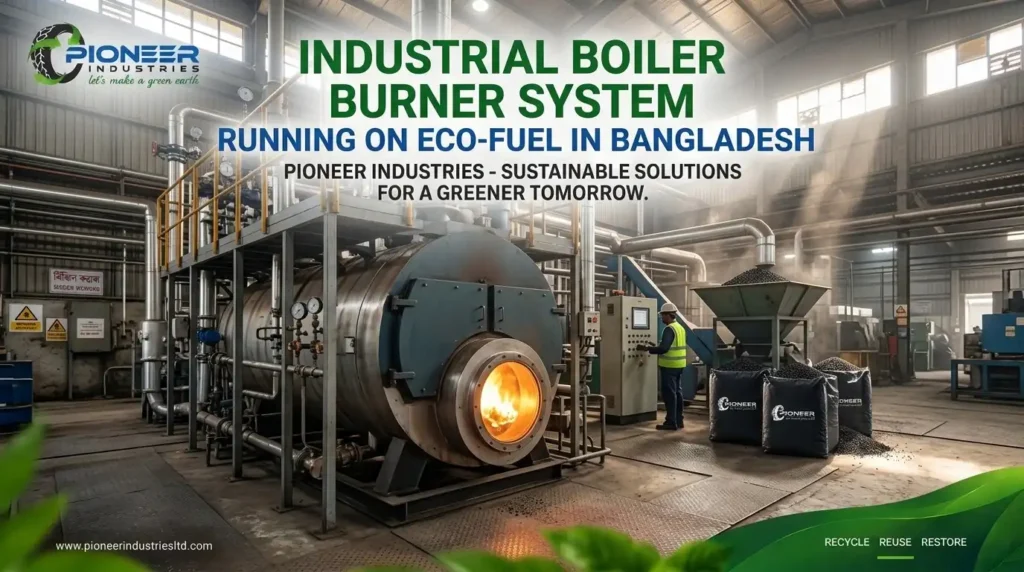
Liquid energy recovered from tire rubber serves as a reliable alternative fuel for heavy industrial combustion. Pioneer Industries Ltd produces high-grade Pioneer Green Oil engineered for optimal burner efficiency across factories, brick plants, steel workshops, glass units, power plants, and hot mix plants.
Technical Parameter | Verified Specification Value |
Calorific Value | 10,400 ± 3% cal/g |
Sulphur Content | Up to 1% |
Ash Content | Up to 0.05% |
Water Content | Up to 0.25% |
Density (at 15°C) | 0.87 – 0.93 g/cc |

Economic and Environmental Advantages for Factories
Adopting circular energy options provides immediate financial and environmental benefits to manufacturing plants operating across Bangladesh. Traditional imported petroleum fuels subject plant managers to market volatility and high shipping tariffs.
By contrast, locally recovered alternative fuels offer significant cost advantages. Based on reference comparisons, switching to green oil yields potential savings of 5–10% compared to heavy furnace oil, and potential savings of 25–30% compared to industrial diesel. Replacing virgin fossil materials with Recovered Carbon Black also lowers production costs for rubber and plastic manufacturers.
Furthermore, plant managers seeking solid biofuel alternatives for specialized grates can incorporate high-density Biomass Briquettes into their operational thermal matrix to replace coal and firewood.
Supporting National Sustainability and Industrial Resilience
Expanding organized recycling infrastructure across Bangladesh enhances national energy security while reducing landfill pressures. Transforming rubber waste into industrial-grade fuel creates a domestic energy buffer that protects local manufacturers against international market disruptions.
Pioneer Industries Ltd remains committed to advancing resource efficiency from our base in Kawran Bazar, Dhaka. By providing reliable alternative fuels and industrial inputs, we help Bangladesh factories maintain competitive production costs while lowering overall industrial carbon footprints.
Embracing circular economy practices through waste tire recycling in Bangladesh offers an effective path toward sustainable industrial growth. By converting municipal scrap rubber into high-heat green oil and recovered carbon black, local manufacturers can protect profit margins, lower emissions, and reduce reliance on imported fossil fuels. Pioneer Industries Ltd is a Dhaka-based eco-manufacturer of pyrolysis green oil, recovered carbon black, and biomass briquettes committed to driving resource efficiency for Bangladesh industry. Ready to cut your plant’s fuel overhead? Request a customized quote today by calling +880 1337 445522, emailing pioneer.greenoil@gmail.com, or contacting us through our contact page.
Frequently Asked Questions
What is waste tire recycling in Bangladesh?
Waste tire recycling in Bangladesh is the industrial process of collecting discarded rubber tires and converting them into alternative fuels, recovered carbon black, and steel through thermal decomposition. This practice diverts rubber waste from landfills and provides local factories with sustainable raw materials.
How does tire recycling support a circular economy?
Tire recycling supports a circular economy by continuously reusing materials from end-of-life rubber products. Instead of disposing of tires after use, thermo-chemical processing recovers liquid fuel, solid carbon, and steel wire, returning these valuable resources back into the manufacturing sector.
What products are recovered from waste tire recycling?
The primary outputs recovered from waste tire recycling include pyrolysis green oil (liquid industrial fuel), recovered carbon black (rubber filler and pigment), recycled steel wire (foundry raw material), and synthetic gas used for continuous reactor heating.
How much can factories save by using green oil from recycled tires?
Based on reference comparisons, industrial facilities switching to pyrolysis green oil can achieve potential savings of 5–10% compared to conventional furnace oil, and potential savings of 25–30% compared to standard industrial diesel fuel.
Where can Bangladesh factories buy recycled green oil and carbon black?
Factories in Bangladesh can purchase pyrolysis green oil and recovered carbon black directly from Pioneer Industries Ltd. Located in Dhaka, Pioneer Industries Ltd provides verified alternative fuels and recovered materials to industrial clients nationwide.
